The History of Conkers: From Horse Chestnuts to British Schoolyards
Every autumn, the pavement under a horse chestnut tree turns into a small glossy treasure hunt. Children who would walk straight past a dropped coin will spend twenty minutes negotiating with a wasp over the same brown seed. Then the shoelaces start disappearing. By half term, half a year group can produce a stretched lace with a chestnut swinging on the end of it, and every one of those chestnuts has a name, a record and a grudge.
Conkers is one of the few great British games that needs no pitch, no kit and no adult supervision. It arrives free, once a year, and it has been doing so for the better part of two centuries.
A tree that is not British at all
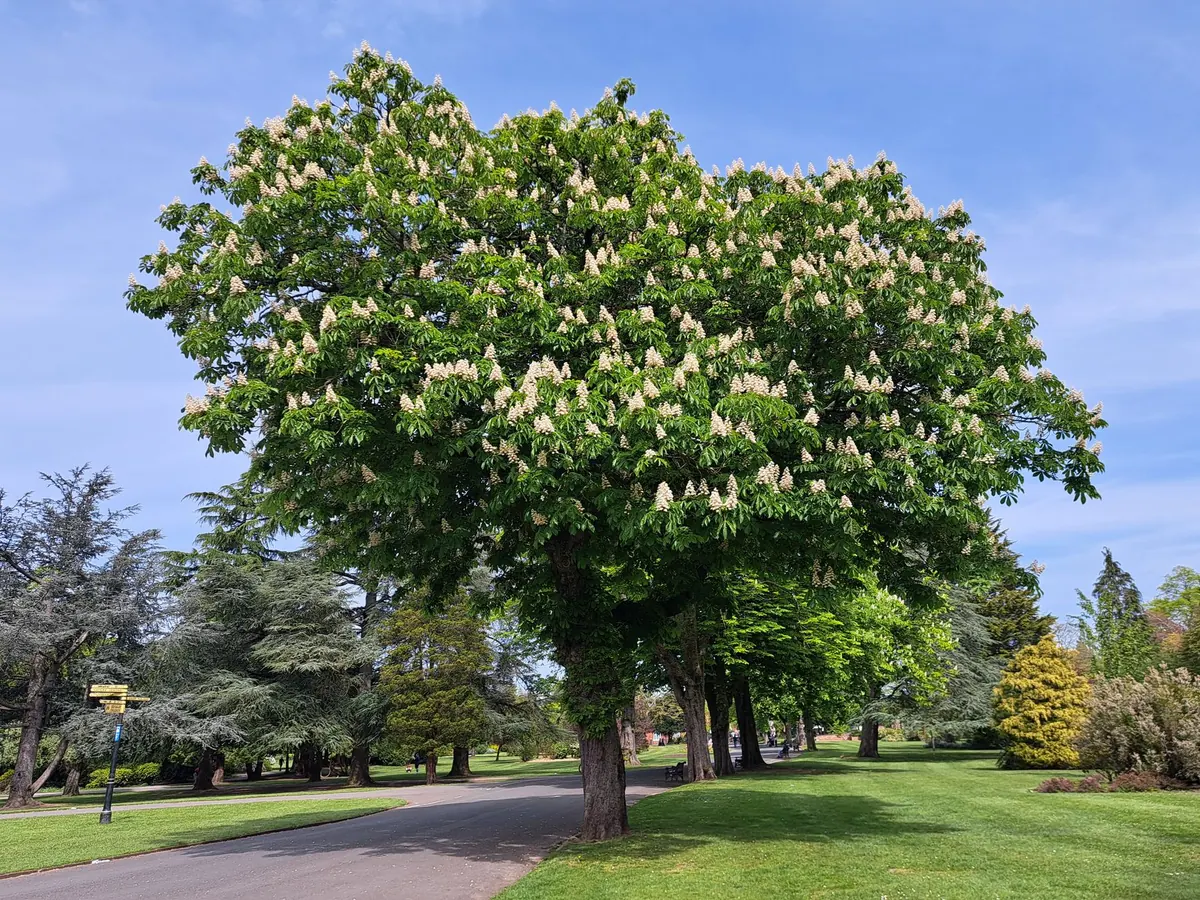
The horse chestnut, Aesculus hippocastanum, comes from a small pocket of the Balkans and was brought west as an ornamental tree, reaching Britain in the 1600s. It had nothing to do with feeding people: the seeds contain aescin, which makes them bitter and mildly toxic, so they were fed to deer and cattle instead, and the starch was used for laundry and for stiffening bookbinders' paste.
What the tree did brilliantly was grow in cities. It is tolerant, fast and generous with shade, which is why Victorian and Edwardian planners lined streets, parks and suburban avenues with it. It also drops its seeds in September and October, in a spiny case that splits open to reveal a polished brown nut. A tree that produces thousands of free, heavy, uniform, hard objects within walking distance of every school in the country was never going to be left alone.
Snail shells, hazelnuts and the word itself
The game is older than the tree's arrival here. Children have long threaded things onto string and swung them at each other. The earlier versions used snail shells, and then hazelnuts: the nineteenth-century playground game of "cob-nut" involved two nuts on strings, whacked together until one cracked.
The word "conker" seems to come from a dialect term for a snail shell, connected to "conch". When horse chestnuts replaced hazelnuts as the ammunition — the first clear printed mention of conkers played with them comes from the Isle of Wight in the 1840s — the old name came with the new nut. Regional names stuck too: in much of Scotland the game was, and sometimes still is, called cheggies.
Why it took over the schoolyard
Timing did most of the work. Conkers lands at the start of the autumn term, when playgrounds are wet, break times are long and there is nothing else to do. The equipment is free. The rules are short enough to learn in one go and flexible enough that every school develops its own version, which is exactly what you want in a game with no referee.
It also builds a season. A conker that has survived a few fights becomes a small celebrity, and the numbers in front of its name — one-er, two-er, sixer — are a currency children understand immediately. In the First World War, that enthusiasm was put to work: schoolchildren were organised to gather conkers for the Ministry of Munitions, which used the starch in them in the manufacture of acetone.
How to play
Get the basics right and the rest is negotiation.
- Collect fallen conkers that are firm and dark brown. Ones still in the husk are fine; leave them to dry somewhere cool and airy for a few weeks.
- Make a hole straight through the middle with a skewer, a bradawl or a thin screwdriver. An adult should do this part, and a conker held in a vice or on a chopping board is safer than one in the hand.
- Thread a shoelace or a length of string through the hole and knot it firmly at one end. Aim for a dangling length of roughly 25cm.
- One player holds their lace so the conker hangs still. The other takes a swing at it. Then swap.
- If your conker is knocked clean off its string, you have lost. If it splits but stays on, most players carry on.
House rules worth agreeing before the first swing
- Stamps: some playgrounds allow players to steady a swinging conker with a foot; others call it cheating.
- Tangled laces: if the strings knot together, the first player to shout "strings" or "no tangle" gets a free hit.
- Scoring: a winning conker becomes a one-er. Many players add the defeated conker's score, so beating a six-er makes you a seven-er.
- First turn: odd-or-even, or the conker with fewer wins goes first. Decide it before anyone gets upset.
Vinegar, ovens and other conker folklore
Every playground has a hardening method, and most of them make the conker worse. Baking dries a conker until it is brittle and cracks on the second hit. Soaking in vinegar mostly makes it smell. Varnish, glue and the classic cheat of a stone or a metal nut hidden inside are all easy to spot and rarely forgiven.
The reliable approach is boring: let conkers cure. A chestnut left in a dry tin or a shed for a month is noticeably tougher than one drilled the day it fell. Many players keep a few back each year and start the following season with twelve-month-old stock.
A word on safety: horse chestnuts are not edible and will make a child or a dog ill, so keep them away from mouths and out of reach of pets. Swinging a conker on a string near faces is the main real risk. Play in the open, keep the swing low, and if anyone is hurt or unwell after eating one, contact a doctor or vet rather than waiting to see.
Conkers today
The game has never quite left. The World Conker Championships has been held in Ashton, Northamptonshire, since 1965, when it began as a pub fundraising idea, and it now draws players from overseas, with organisers supplying the conkers and strings so nobody turns up with a ringer. Schools, meanwhile, have had periodic wobbles about playground risk; some ban conkers outright, and every autumn a handful of headlines follow. Most schools simply set ground rules instead, which is usually the better answer.
The trees themselves are under pressure. The horse chestnut leaf miner, first recorded in Britain in 2002, browns the leaves by late summer, and bleeding canker has thinned out some mature trees. Neither has stopped the crop. Look under a big tree in a park this October and you will find more conkers than you could ever string.
Getting started this weekend
Wait for a dry day, because wet conkers are slippery and dull. Take a bag to a park with mature horse chestnuts and gather only what has already fallen. Sort them at home: keep the firm, dark, round ones, and put the pale, soft or cracked ones in the compost. Drill a handful, string them, and write the date on each with a marker so you know what you are dealing with.
Play on grass, away from windows and faces, and agree the house rules out loud before the first swing. Keep a spare lace in the tin. Then find someone who thinks they can beat you, and let the season settle it.
Photo: Christian Navarro / Pexels